PIM Sync
Legacy to Modern AI-Native Data Management. Replace CSV-bound catalog workflows with structured, non-destructive product data automation — across every market, language, and channel.
Lo-Code Accuracy Meets Enterprise Global Scaling
Universal Commerce Protocol infrastructure with AI-native data mirroring resilience. Non-destructive workflow patterns, design-first collaboration tools, and secure migration data layers — built on tridirectional sync across Shopify, Webflow, and Cloudflare.
App Features
Dashboard
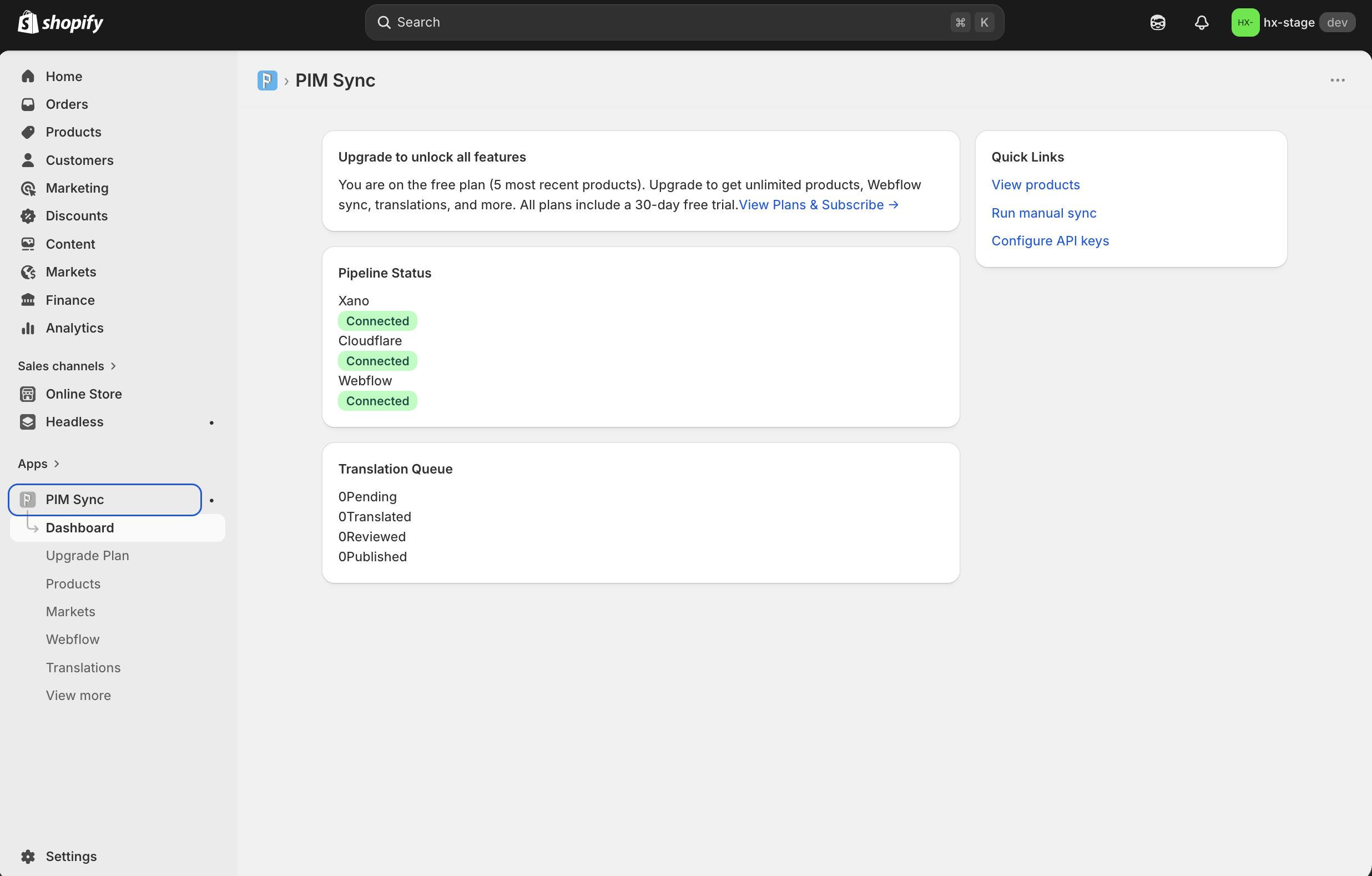
Monitor your pipeline status at a glance. See connection health for Xano, Cloudflare, and Webflow, track your translation queue, and access quick links to products, sync, and API configuration.
Upgrade Plan
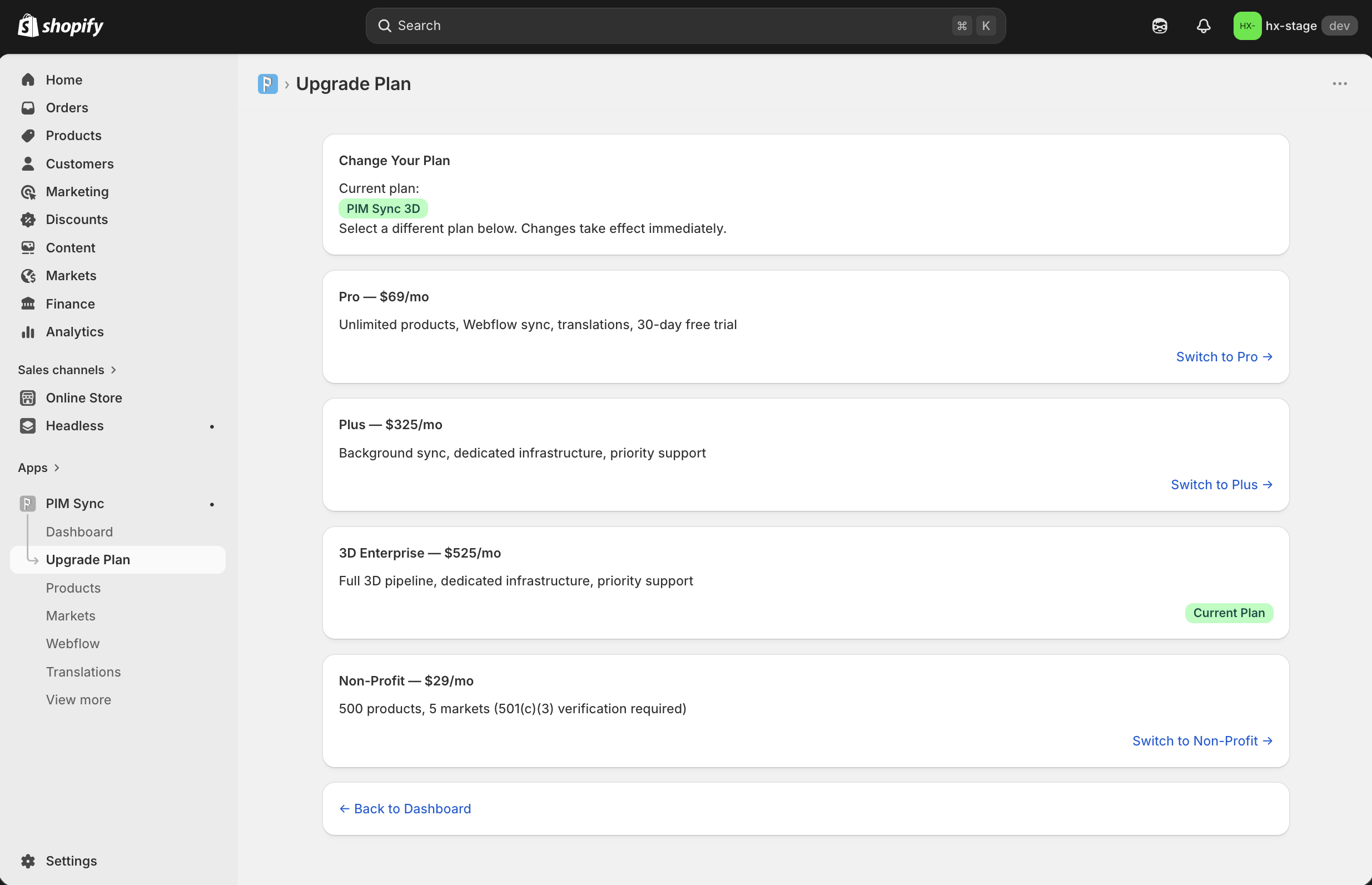
Choose from four tiers — Pro, Plus, Enterprise, and Non-Profit. All plans include a 30-day free trial. Switch plans anytime with changes taking effect immediately.
Products
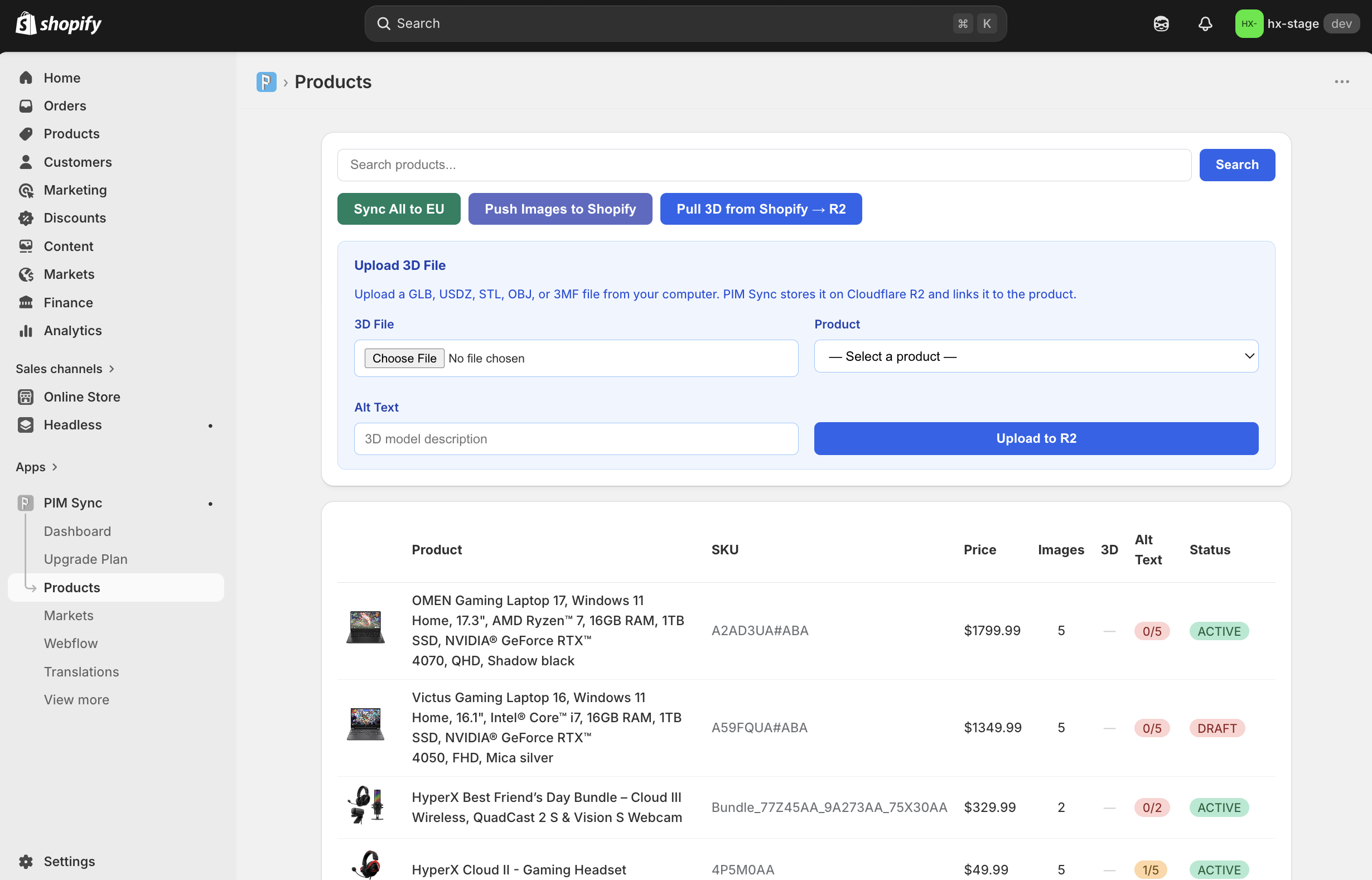
Browse your full Shopify catalog with sync status, image counts, asset indicators, and alt text coverage. Sync products to EU markets, push images to Shopify CDN, or pull assets from Shopify to R2 — all in one click.
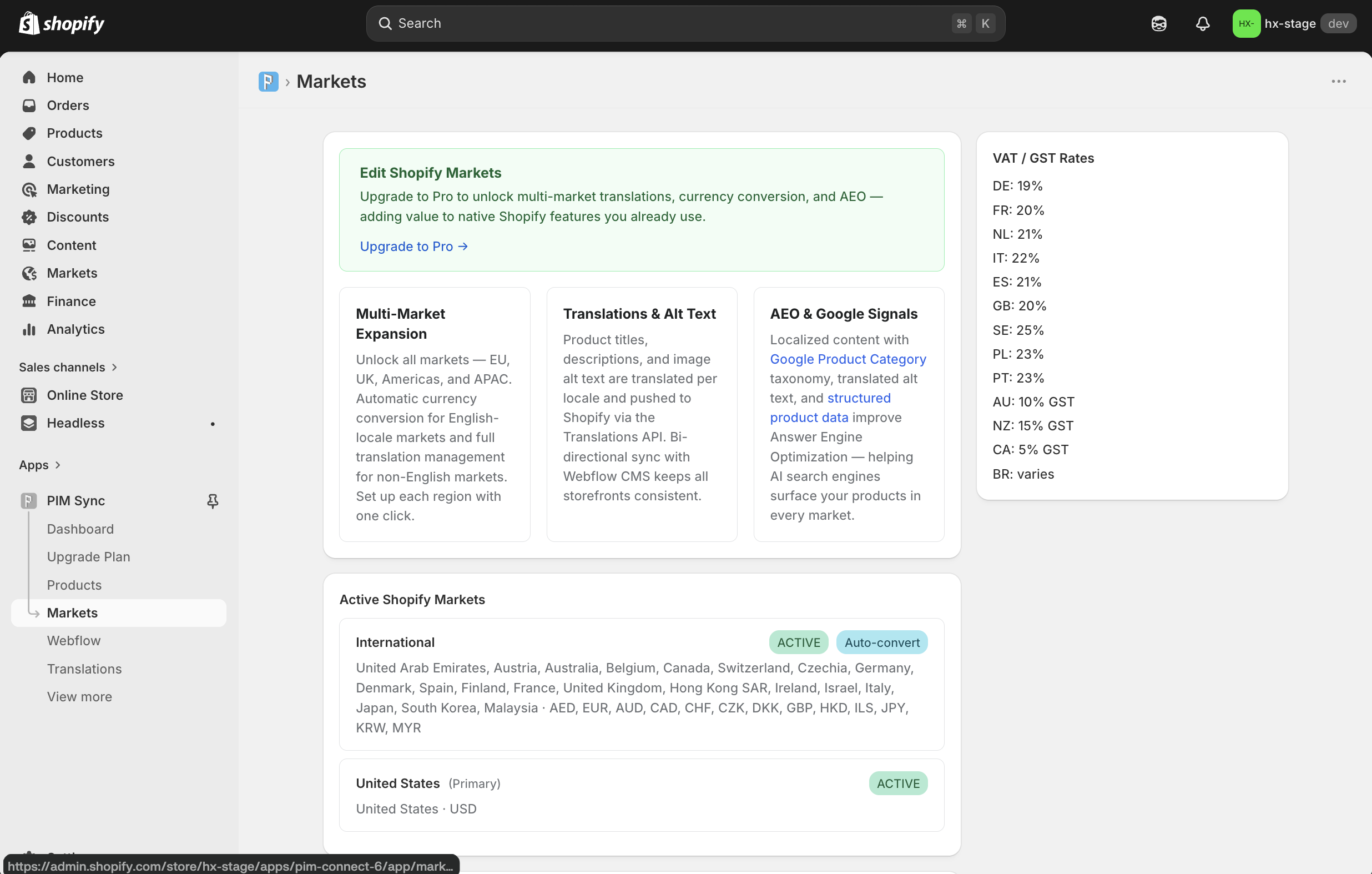
Markets
Expand into EU, UK, Americas, and APAC markets with Shopify Global Catalog automation. PIM Sync handles AI-enhanced multi-market translations via Meta m2m100, automatic currency conversion, image alt text per locale, and Google Product Category tagging with structured data for AEO.
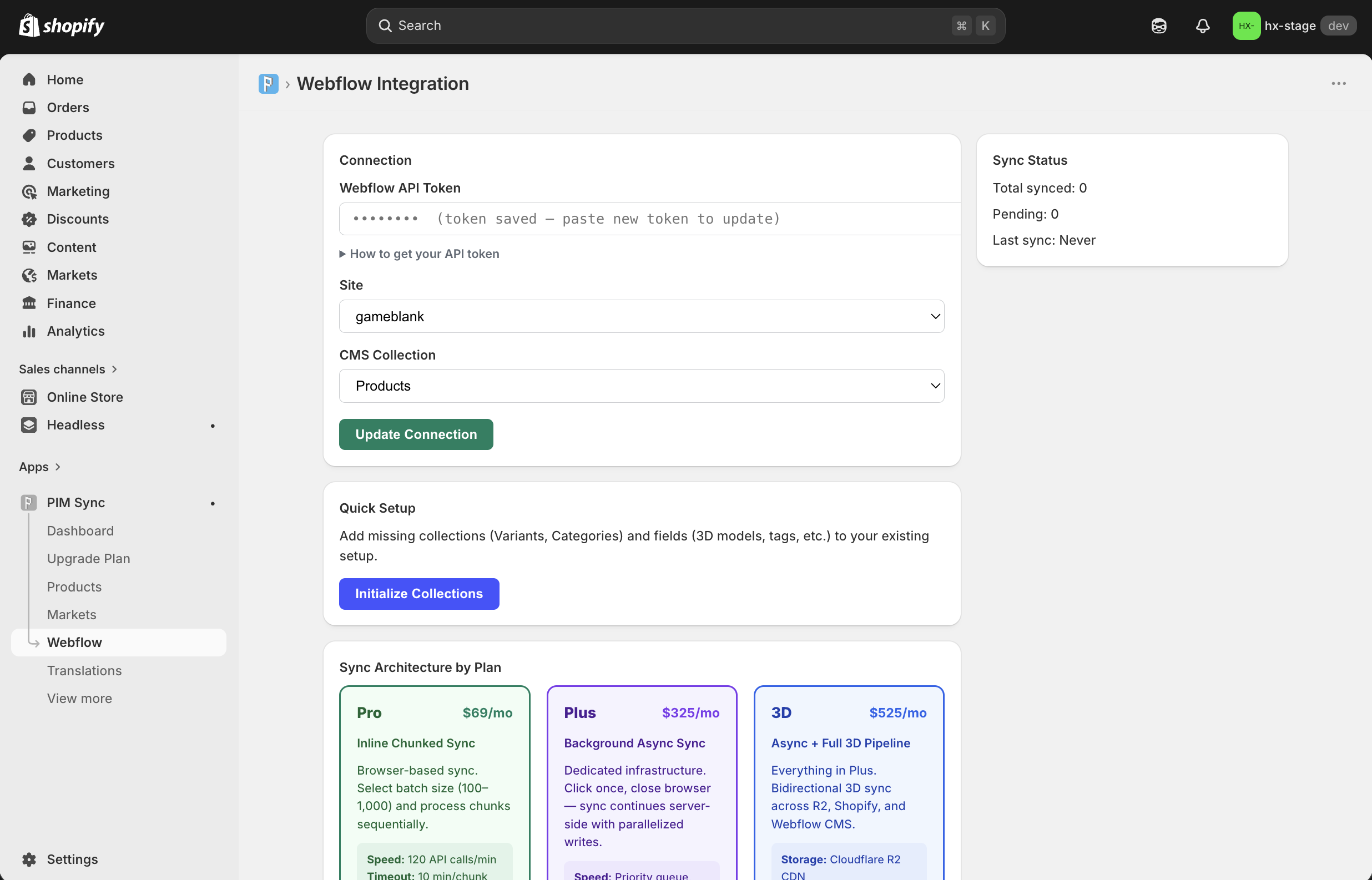
Webflow Integration
Connect your Webflow CMS with OAuth. Choose your site and collection, then sync products, variants, and categories. Quick Setup initializes missing collections and fields automatically.
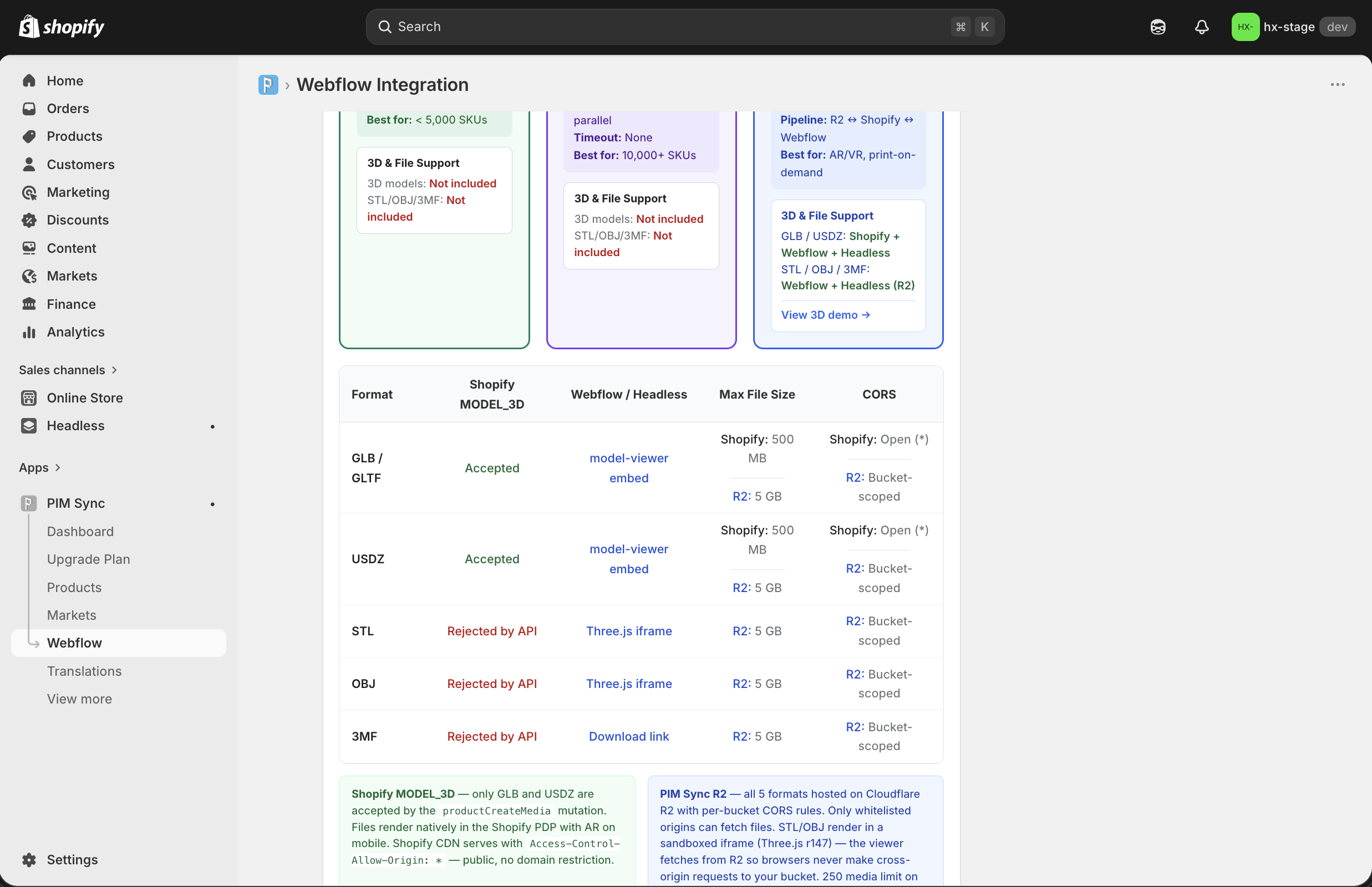
Asset & Worker API Infrastructure
Mint any file type to Cloudflare R2 with CDN delivery, per-bucket CORS rules, and a signed URL per asset. 3D is one class among many: GLB, USDZ, STL, OBJ, and 3MF are supported, and Shopify-accepted formats (GLB/USDZ) render natively with AR on mobile.
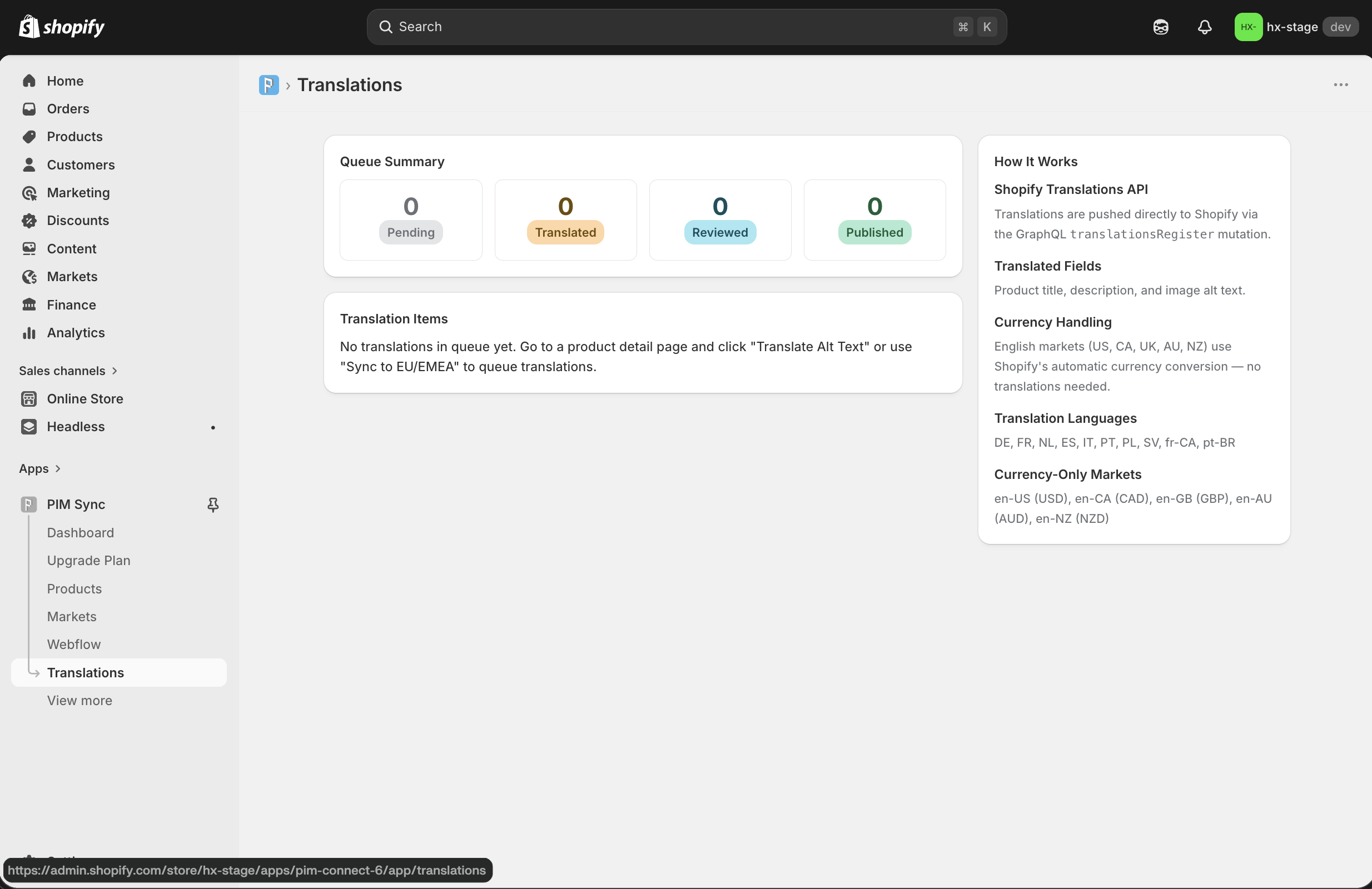
Translations
Translate product content using Meta's m2m100-1.2B multilingual NLP model running on Cloudflare Workers AI. Translations are pushed directly to Shopify via the GraphQL translationsRegister mutation as part of Global Catalog automation. Track your queue from pending through translated, reviewed, and published.
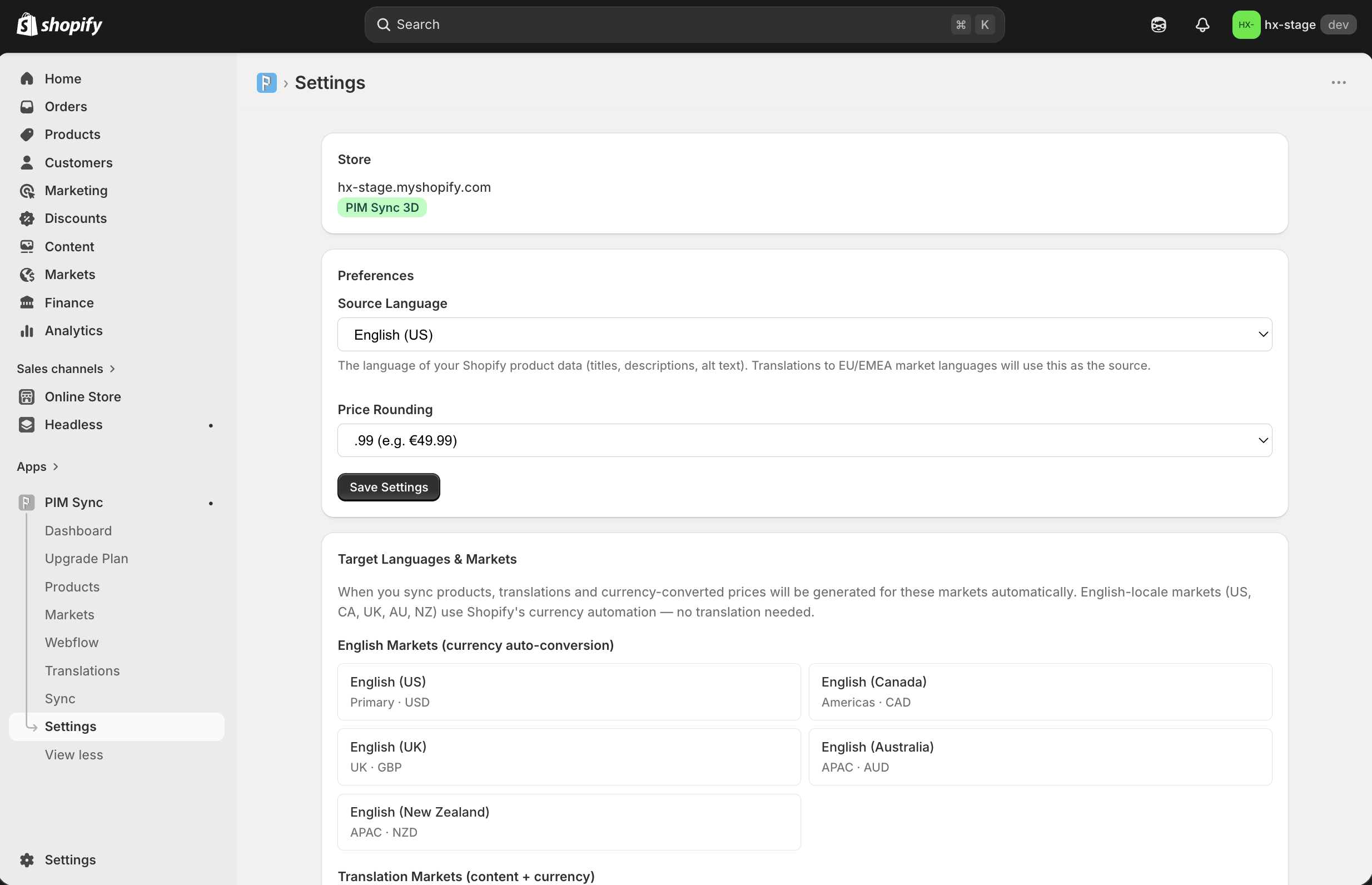
Settings
Configure your source language, price rounding rules, and review your target markets. English-locale markets (US, CA, UK, AU, NZ) use Shopify's automatic currency conversion. Translation markets get full content and currency handling.
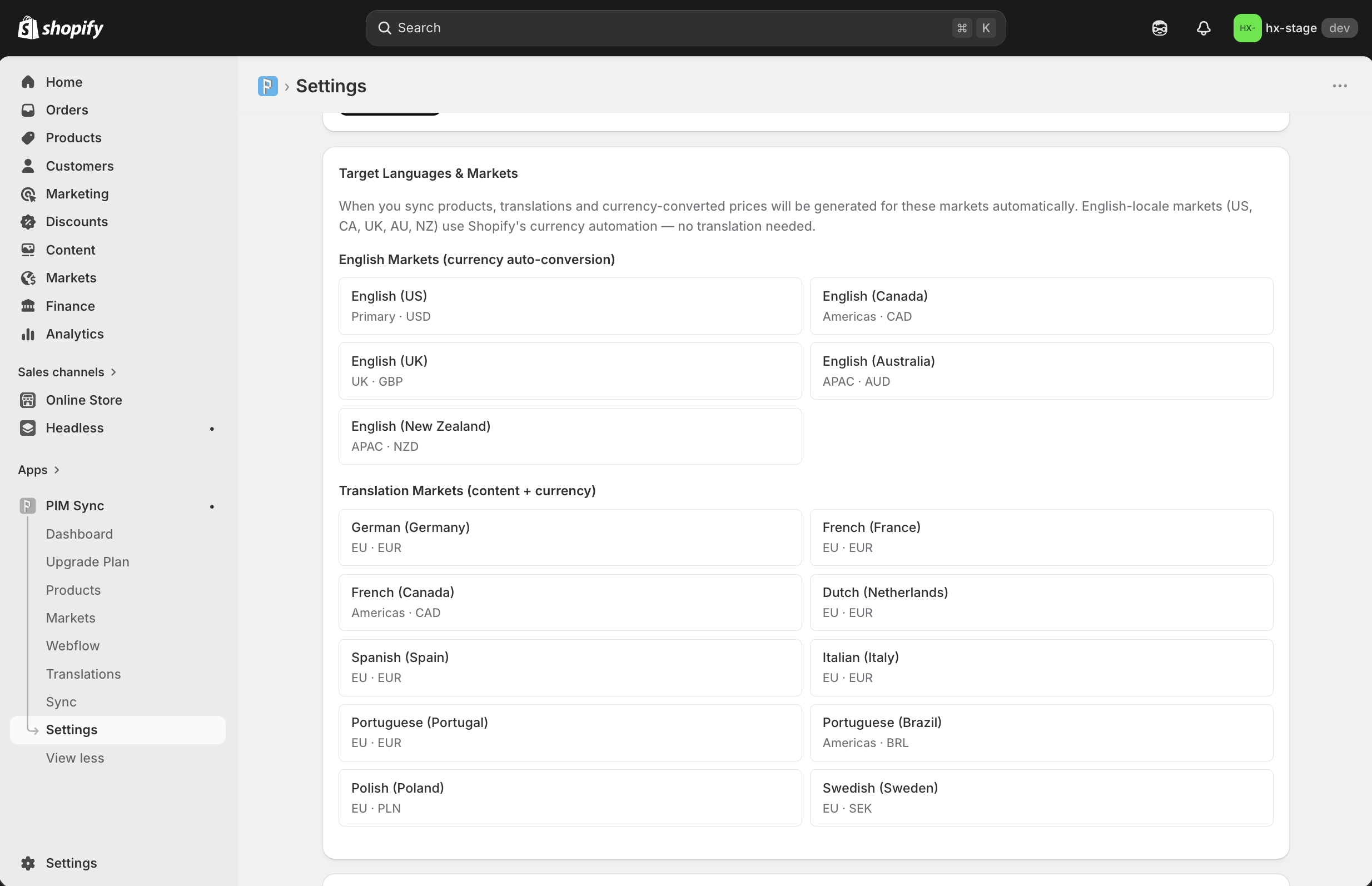
Target Languages & Markets
See all your configured markets at a glance — English markets with currency auto-conversion and translation markets with full AI-enhanced content localization. Shopify Global Catalog automation paired with Meta m2m100 NLP delivers optimized translations across German, French, Dutch, Spanish, Italian, Portuguese, Polish, Swedish, and Brazilian Portuguese.
Data Architecture
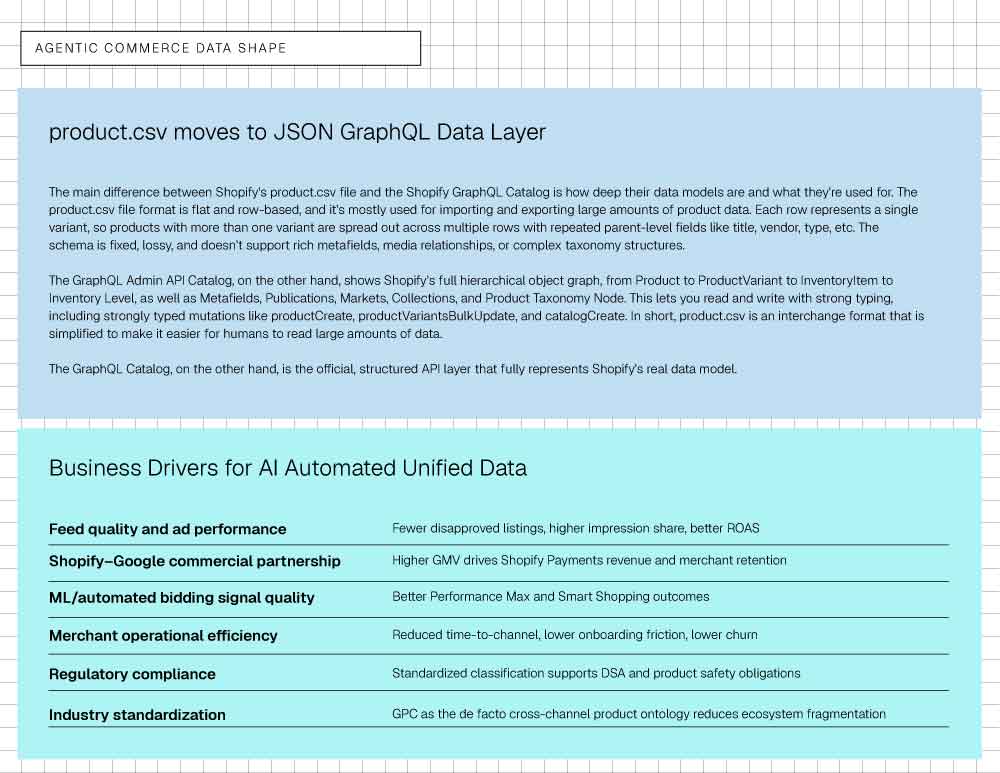
Agentic Commerce Data Shape
PIM Sync bridges Shopify's flat product.csv format with the full GraphQL Admin API catalog. The structured data layer gives you access to Metafields, Publications, Markets, Collections, and ProductTaxonomyNode — enabling strongly typed mutations and machine-readable interchange at scale.
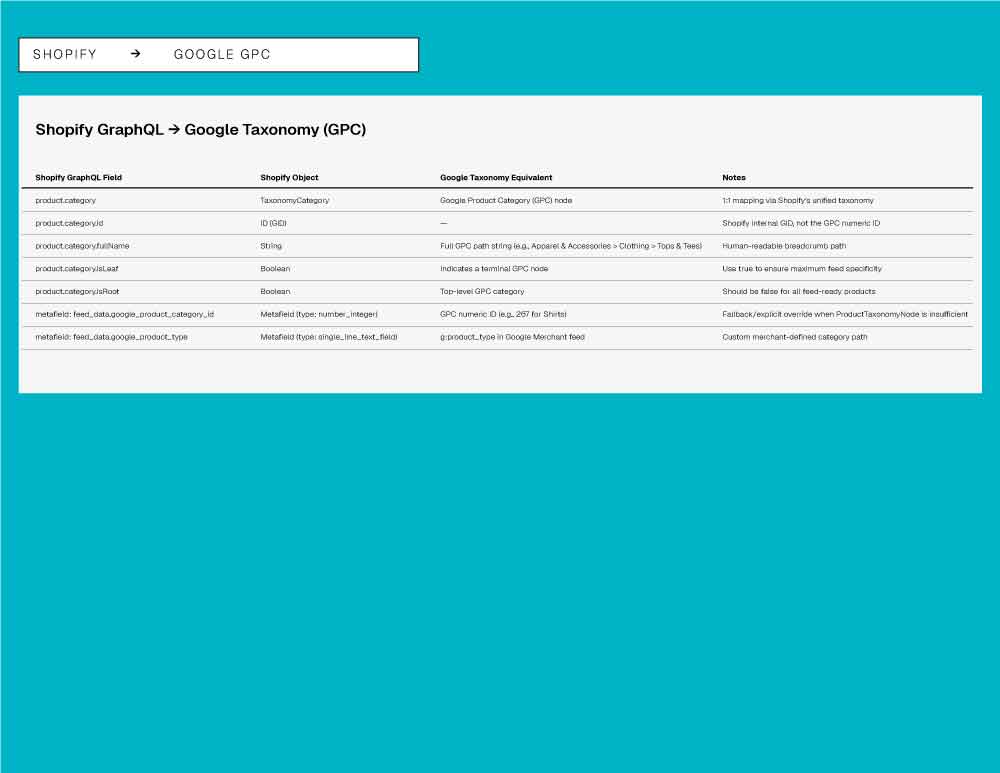
Shopify → Google Taxonomy (GPC)
Direct mapping from Shopify GraphQL fields to Google Product Category nodes. PIM Sync maps product.category, fullName paths, and leaf-node booleans to GPC IDs, with metafield fallback for explicit overrides when ProductTaxonomyNode is insufficient.
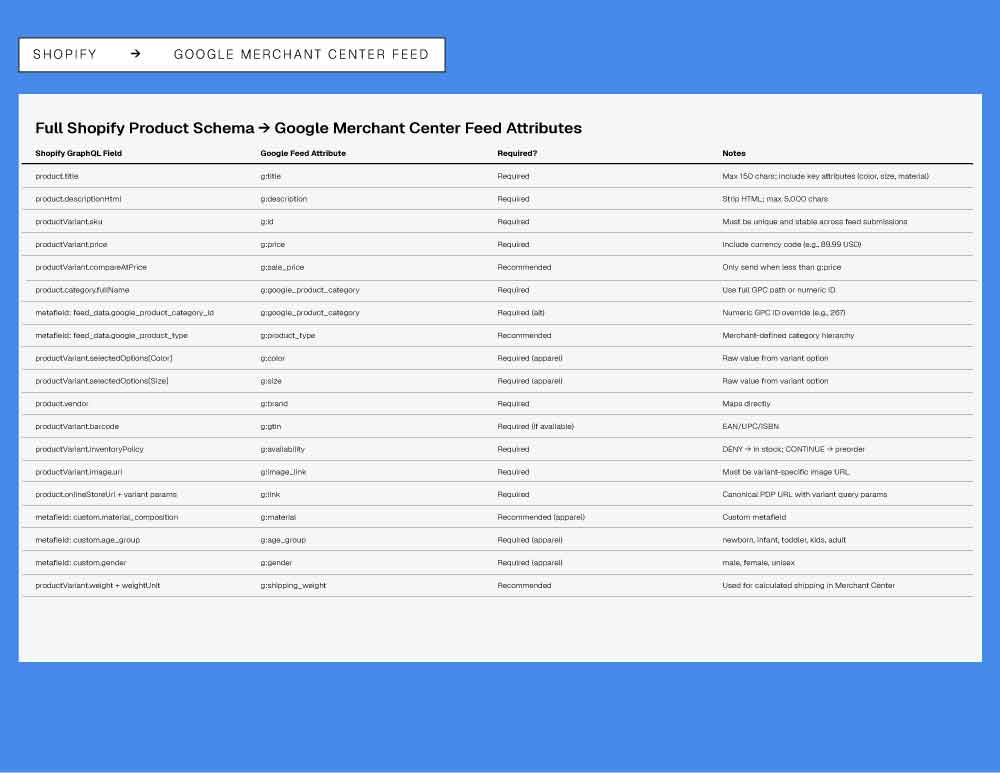
Shopify → Google Merchant Center Feed
Full product schema mapping from Shopify GraphQL fields to Google Feed attributes. Every required and recommended field is covered — from g:title and g:price to g:color, g:age_group, g:gender, and g:shipping_weight.
Why Google Product Category Matters
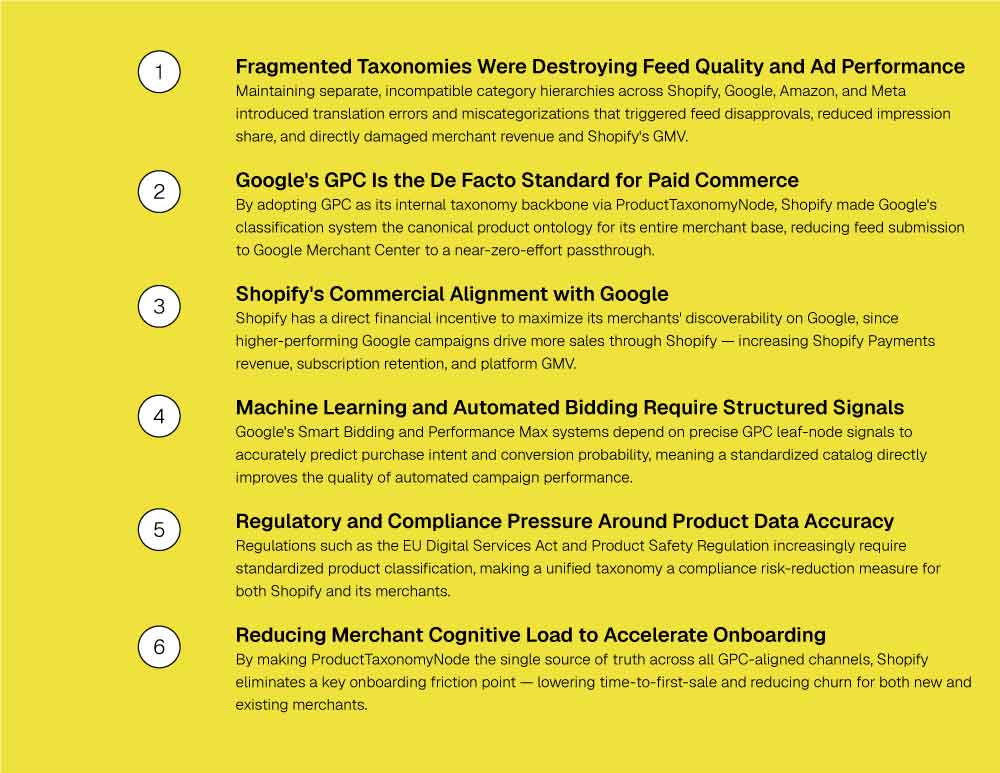
Six business drivers for AI-automated unified data: better feed quality and ad performance, Shopify-Google commercial alignment, ML bidding signal quality, merchant operational efficiency, DSA/Product Safety regulatory compliance, and GPC as the de facto cross-channel product ontology.